The ASO Playbook
Grow organic installs, one tactic at a time
Field notes from optimizing 120+ apps: keyword research, conversion testing, Apple Search Ads, localization, and the case studies behind the numbers.
The CPP framework: custom product pages in 2026
Apple now lets you run 70 custom product pages, and they show in organic search. The five-phase system — research, prioritize, build, measure, scale — and which page to build first.
How much does App Store Optimization cost in 2026? Audit vs retainer vs in-house
Tools from $12.50 a month, published retainers $1,000–$5,000, a loaded hire about $162K, and only 3 of 15 agencies we checked publish a price. Five ways to pay, every price dated, ours included.
Standing out in a flooded App Store: a 2026 playbook for the AI-coded app surge
AI coding tools doubled new App Store releases in H1 2026. Apple's 2025 search data, our scan of where new apps land, what Apple and Google changed, and six levers a funded app can pull.
App Store In-App Events for ASO: who sees them, what ranks and how they win back users
When people search for your app, only past downloaders see your In-App Event card. What Apple says about ranking, five ways events win back users, Apple's limits and how to measure an event.
App Store Category Strategy: How to Choose, Use and Change Yours
Apple indexes your secondary category for search, but in 1,786 checks across four storefronts it never put an app in that category's chart. What each slot controls, a four-lens scorecard, and how to change category safely.
App Store age ratings in 2026: the Social Media descriptor, the 13+ floor and what a higher rating costs your ASO
One new question can make your app 13+. What counts as social media, and what a higher age rating costs in browse, Apple Ads and your product page.
The App Store Asset Library is live: which header to ship, and how to test it
Apple switched on the Asset Library on Oct 5, 2026. Which of three header formats to build, why the 16:9 universal asset can't go to Apple Ads, the role and submission traps, and how to test while iOS 27 runs on 16% of devices.
App Store promotional text: how to use its 170 characters
Apple's 170-character promotional text changes without a submission and doesn't affect ranking. Where it shows on iOS 27, why new versions and new languages copy stale text, where a sale is allowed, four rotation playbooks, how to measure a change, and Google Play's Promotional content.
Apple Ads campaign structure: brand, category, competitor and discovery
Search Match starts on in every Manage Bids ad group, and exact negatives let close variants through. The 2026 four-lane blueprint (U.S. brand campaigns convert 73.5% of taps, discovery 44.5%), a negative-keyword matrix for every lane, Maximize Conversions budget floors and naming templates.
App Store subtitle examples: 40 live subtitles by pattern
We read the live subtitles of 160 top-chart US apps on September 28, 2026. 146 had one, the median used 28 of 30 characters, 32% repeat a name word, and keyword lists led six patterns. 40 dated examples plus a CSV of all 160.
App Store long-tail keywords: when to climb to head terms
In our 18-search US snapshot, apps at positions 6–10 had a median 757 ratings on long-tail phrases vs 17,970 on head terms. Which rung to target, four gates for when to climb, 4-week swap rules, and what July 2026 changed.
App icon design best practices 2026: Liquid Glass and Google Play
iOS now renders your icon in six appearances, and Google Play rounds it to a 30% corner. The 2026 specs for both stores, eight design rules that survive tinted mode, the Icon Composer build, and why an iOS icon test starts one release early.
App Store tags: how Apple's AI assigns yours and what to write
Apple's LLMs now tag apps in US search results and on product pages, built from en-US metadata and checked by humans. Still US-only in September 2026. What Apple reads, why you can deselect but never add a tag, the appTags API, and what to write to earn the right ones.
Apple Ads attribution in 2026: AdServices, SKAN and AdAttributionKit
Apple Ads didn't move to AdAttributionKit: since April 10, 2025 it only adds SKAN 1–3 click-through postbacks naming the placement (10–40). Keyword attribution still comes from the AdServices token, and since September 2026 age- or gender-targeted ad groups get no AdServices attribution. The 2024–2026 changelog, a gap table and setup.
Today tab and Search tab ads: how to use Apple's discovery placements
All three of Apple's no-keyword placements bill per tap (invoice codes CPT-TT, CPT-ST, CPT-WB). In 2025 the Search tab averaged a $1.81 CPA and the Today tab $5.08. Targeting limits, custom product page rules, break-even bids and when each placement pays off.
ChatGPT ads for app installs: an early look for Apple Ads teams
ChatGPT Ads can count installs but not buy them: no install objective, per-click billing (impression billing in beta), click-only MMP attribution and no IDFA. At OpenAI's suggested $3–$5 bids it's very unlikely to beat a $4.06 US Apple Ads CPI. What's confirmed, what's reported, and a four-week test.
App store fees in 2026: the fee map and your paid-UA break-even
Apple's EU in-app rate drops to 26% on October 1, US link-outs pay Apple 0% while a 15% proposal sits in court, and Google Play subscriptions pay 10% + 5%. A dated fee map, and what each fee does to your max CPA.
App Store Connect Analytics 2026: peer benchmarks, cohorts and your ASO funnel
Apple's conversion rate divides downloads by impressions, not page views, so it runs far below the 8.56% page-view average vendors quote. What each metric counts, how to read peer quartiles and Day 35 download-to-paid, and Play's July 2026 reset.
ASO for subscription apps: optimize for payers, not installs
78–90% of free trials start on install day, so your App Store page pre-sells the paywall. Track payers per 1,000 impressions, disclose premium without pricing screenshots, promote the plan you want sold, and read every test at day 35.
How to measure ASO ROI: KPIs, incrementality tests & a payback model
The same ASO program shows +12.9% ROI valued at net revenue and +554% valued at ad CPI. Which installs ASO can claim, how to prove uplift with a localization holdout, and the break-even uplift to know before you sign.
20 ASO questions founders ask AI, graded by evidence
Apple or Google confirm the answer to only 10 of 20 common ASO questions. Each one graded Confirmed, Tested, Consensus or Myth with a dated source, from the Apple Ads halo (32 paid vs. 2.2 organic installs per $100) to update cadence.
App Store review summaries: how Apple's AI writes yours
Apple now writes a 100–300-character AI summary of your reviews in 9 English storefronts, and you can't edit it. How the model picks what to say, how to track it through the API, how to report a wrong one, and what changes it.
App Store Connect's new Indian languages: what changed and how to test them
Apple took India's App Store from 2 to 12 localizations in March 2026, but on September 27 only 9 of India's top 173 iPhone apps had a listing in any of the 10 new languages. The locale codes Apple documents, the market, and a 28-day test you can run.
Localizing keywords vs translating your App Store listing
We ran 12 common app keywords through Google Translate for 7 App Store storefronts, and Apple's autocomplete matched the translation in only 44 of 84 checks. What locals type instead, why Spanish (Mexico) isn't Spanish (Spain), and a 7-step research workflow.
ASO for mobile games in 2026: keywords, creatives, LiveOps and soft launch
A game genre converts worst on each store and Apple Ads game CPA hit $6.14 in 2025. Genre keywords, gameplay creatives, LiveOps events, new platform surfaces, and our tally of PocketGamer.biz's soft-launch list (updated July 6, 2026).
Finance app store review guidelines: what listings can say
The UK's crypto risk warning is 167 characters; Apple's promotional text holds 170. What a finance app's name, subtitle, screenshots and ratings can say under Apple, Google and regulator rules, field by field.
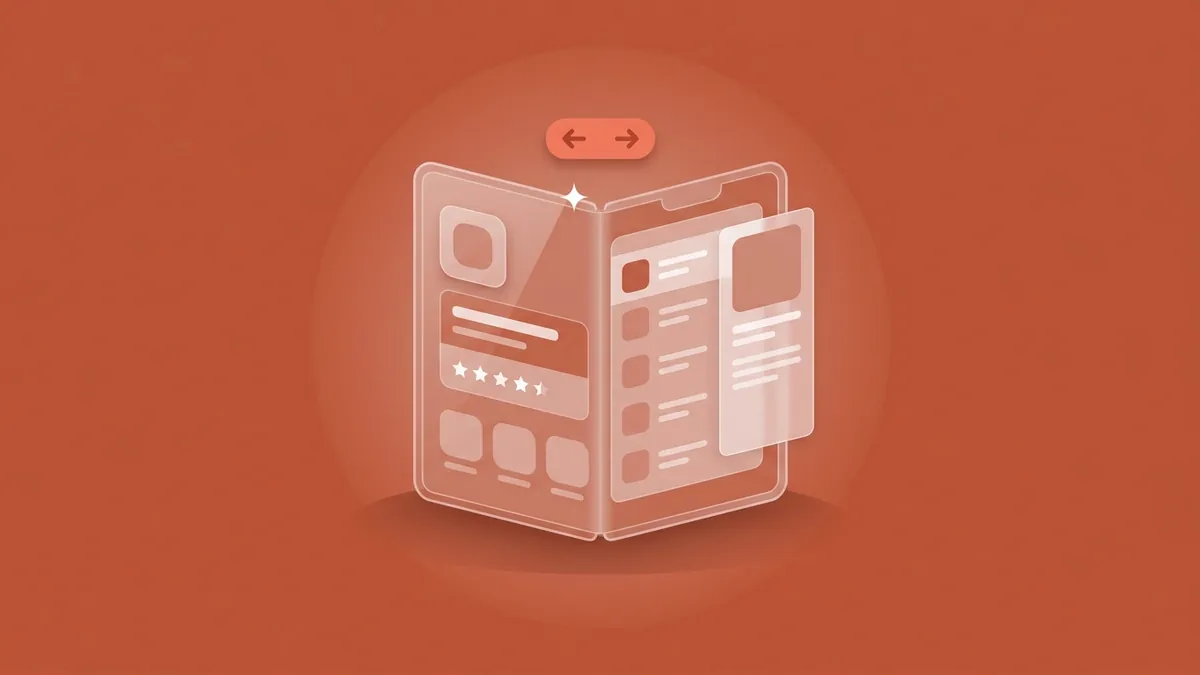
iPhone Duo ASO: screenshot sizes, previews & product page guide
iPhone Duo screenshots are 1398×2034 outside and 2007×2853 inside, and App Store Connect can't take them yet. Resizing your 6.9-inch set crops about a third of the frame; here's what to build instead, and when to ship it.
App Store keyword field: 15 rules, myth vs. evidence
Apple's help page says 100 bytes; its own guide says 100 characters. 15 keyword field rules with a verdict and a source each, from commas (13 of 100 characters in a 14-word field) to plurals, plus a test you can run in App Store Connect.
App Store and Google Play character limits 2026 (and what's indexed)
Every field's limit on both stores in one table: subtitle 30, keywords 100, Play short description 80. Plus which fields each store actually indexes, graded by evidence.
Google Play store listing optimization: title, short and long description (2026)
Google Play indexes 30, 80 and 4,000 characters, and each field has a different job. How to write all three, what policy rules out, and what 23 top listings do with keyword density (top word: a median 3.2%).
App not showing in App Store search? 12 checks to fix it
Missing from search and ranking lower are two different problems with different owners. A five-minute fork test, 12 checks in order, and why you escalate to Apple after 72 hours, not a week.
App Store cross-localization by country: which keyword fields rank where
We checked all 175 storefronts against Apple's own localization table. English (U.K.) isn't listed in the US, India now lists 12 localizations, and the popular third-party tables disagree with Apple in up to 10 storefronts.
App localization cost in 2026: what each tier really costs
Translating an App Store listing costs about $110–$215 per language; in-app localization runs $2,000–$30,000+. Five tiers priced from public rate cards, plus the installs it takes to pay each one back.
GEO for apps: how to get your app recommended by ChatGPT and Gemini
When ChatGPT recommends apps, 47.5% of its citations are App Store and Google Play pages. What each assistant reads, six fixes ordered by leverage, where Siri fits, and a 40-prompt panel to measure it.
ASO and Apple Search Ads: the 2026 keyword alignment loop
Apple won't show an irrelevant app's ad at any bid, and in one 2026 US study 10 more points of title relevance tracked 2.58 better ad positions. The six-step loop from search terms to metadata, CPP keywords, rank checks and bid step-downs.
App Store & Google Play screenshot sizes 2026
1320×2868 for the 6.9-inch iPhone, 10 vs 8 screenshot slots, 15–30s previews, and why an iOS export fails Google Play's 2:1 rule. Every spec, plus what converts.
App Store creative assets & product page headers: the iOS 27 playbook
Apple's header template is 3840×1646 px, but only 17% of it is art-safe. Exact specs read from Apple's own files, the rules that get assets rejected, a Q4 swap calendar, and how to pair headers with custom product pages.
Holiday ASO 2026: the Q4 playbook for App Store and Google Play
Black Friday is Nov 27, but your App Store deadline is Nov 6. A dated 2026 calendar across keywords, iOS 27 creative assets, events and Apple Ads, where Q4 2025 CPA ran 30% above Q3.
Ask Play & Gemini: Google Play ASO when AI answers first
On conversational Google Play searches, organic results can start around the fourth screen. What Ask Play and Gemini read, how to get your app named, and a five-market test you can run yourself.
Apple Ads Maximize Conversions: when to switch from manual CPT bids
Apple recommends a budget for at least five conversions a day, which runs from about $5 a day in Photo & Video to $72 in Sports. The five-gate test for which campaigns to switch, target CPA from break-even, and a 28-day migration protocol.
Apple Ads' second ad slot: is brand defense still worth it?
Since March 2026, Apple Ads can place a second ad inside the organic results, even on your brand. The evidence (search impressions down 18–55% for apps without heavy ad spend), a holdout test, and the break-even math.
The ASO audit checklist: 60 scored checks for the App Store and Google Play
60 pass/fail checks across both stores, weighted into a 100-point score with 4 gate checks that cap your grade. 57 of the 60 need no paid tool, and the printable scorecard is ungated.
How to rename your app without losing App Store rankings
A rename keeps your App Store ID, ratings and reviews, but not the people who type your old name: when Twitter became X, Twitter Lite downloads jumped around 350%. The before, launch-week and 90-day plan for both stores.
Fitness app ASO: the New Year playbook (start in November)
Fitness installs start climbing on December 26 and are up 46% by New Year's Day, but iOS keywords only change with an app version. The dated Nov–Feb calendar: keywords by Dec 1, a page per goal, a Challenge event published Dec 18.
How long does App Store Optimization take? A week-by-week timeline
Apple reviews 90% of submissions within 48 hours, but iOS keyword ranks take about 4 weeks to settle. The three-clock App Store Optimization timeline for iOS and Google Play, and when ASO isn't worth it yet.
Which languages to localize your app into first: all 50 ranked
Apple now supports 50 App Store languages. We scored every one on six factors: English (U.K.) reaches 172 storefronts with no translation, and French, Japanese and Spanish (Mexico) lead the rest.
App Store A/B testing: a product page experiments playbook
Apple gives you ~4 product-page tests a year — visuals only, 90 days each, one at a time. What to test first (most visitors never scroll past the first screen), the sample-size math, and how to avoid fake winners.
The App Store on Apple Vision Pro: what spatial computing means for ASO
Apple sold under a million Vision Pros — but its App Store has ~2,000 native apps and no top charts, making it the least competitive ASO surface there is. What changes vs. iOS, and whether spatial is worth your time in 2026.
How to mine app reviews for ASO keywords (free tool)
Reviews are keyword research your users write for free. We ran 800 real reviews through our free analyzer — Duolingo's fans praise "chess" before keyword tools notice, and Babbel's critics name where they're going. The five-step workflow.
Apple Search Ads costs in 2026: CPT, CPA & the break-even bid
The median install costs $1.80 globally — but Sports apps pay $26.81 and Education pays $1.64. The 2026 benchmarks, the four formulas that set your real max bid, and a free calculator to run your own numbers.
How to do basic ASO with free tools
You don't need a paid suite to start ranking. A free, six-tool workflow — keyword list, title & subtitle, a packed 100-character keyword field, a previewed listing, and extra markets — in one afternoon.
How to measure customer sentiment for app reviews
Your star rating tells you how many; sentiment tells you why — and it moves first. The net sentiment score formula, the 7 metrics that matter, 2026 benchmark bands, and how accurate automation really is.
The key features of an effective ASO tool
ASO tools run from free to $500+/mo, and most of that spread is features you'll never open. The 8 capabilities that actually matter, must-have vs. nice-to-have, and the one quality that beats the whole feature list.
How to choose the right AI tool for ASO & Apple Ads
Every ASO tool now claims "AI" and most teams pick the wrong one. The five-question framework we use to choose by job, stage, and budget — and where AI quietly wastes money.
How custom product pages support global expansion
Test a new market before you localize everything. How to use a single localized custom product page as a cheap market probe — pick the right storefronts, adapt the pitch, and validate demand before you commit.
How to do app market research: the 2026 guide
42% of failed apps were built for a market that never existed. The five-step process to prove demand before you build — size the market, profile users, mine competitors, validate for real.
How to build an effective pre-launch marketing strategy for your app
Most apps launch to silence. The week-by-week plan across five tracks — landing page, beta, ASO, pre-registration, and PR — and how to concentrate it all into launch-day install velocity.
WWDC 2026: what changed for the App Store & ASO
Apple is bringing video to search results and creative you can change without a release, plus an AI recommendation feed. Every WWDC 2026 change that matters for ASO — and what to build first.
The complete guide to Apple Ads automation in 2026
Stop adjusting bids by hand. The three rule families — Optimize, Protect, Monitor — the thresholds to set them at, the rollout order, and the traps that quietly lose money.
Custom store listings on Google Play: the 2026 guide
Google Play lets you run up to 50 versions of your store page. The five targeting types, how to set one up, which to build first, and how to measure conversion per listing.

How to leverage Reddit to increase your app's visibility
Reddit is now the #1 most-cited source in AI search — ~40% of all citations. The 2026 playbook: which subreddits, the 9:1 rule, and how one thread becomes a citation that keeps surfacing your app.
App Store keyword research: the 2026 guide
Almost 65% of App Store downloads happen right after a search. The step-by-step process for finding the keywords worth targeting — seed, expand, score, place, track — and where each one goes in your metadata.
How to analyze app store reviews: a 2026 workflow
Hundreds of reviews a week and no idea what to do with them? The five-step loop that turns a review pile into a ranked list of fixes, features, and ASO wins.
The best Apple Ads tools in 2026 (tested & compared)
Cost-per-tap is $2.25 and Apple Ads convert at ~66%, so wasted spend is the enemy. The best tool for each job — automation, all-in-one, attribution — and when Apple's free dashboard is enough.
How to build an effective ASO strategy
ASO isn't a one-time edit — it's a flywheel. The six-step framework that turns keywords, creatives, ratings and iteration into compounding growth, in the order that works.
iOS app marketing in 2026: the complete playbook
Every channel, what it costs, and the order to build them in. almost 65% of App Store downloads follow a search, so ASO is the floor every paid channel stands on.
App Store reviews: the 2026 ASO guide to ratings
Reviews feed both ranking and conversion. The thresholds that gate visibility, how to get more with the native prompt, and why replying to reviews is worth the effort.
How to localize app screenshots for new markets
Translating your captions isn't localizing them. The translate → localize → culturalize ladder, frame by frame — and how far up it each market deserves to go.
The best ASO tools in 2026 (tested & compared)
Prices run from free to $2,500/mo and most teams overpay. The best tool for each job — keyword research, reviews, intelligence — with real pricing and honest verdicts.
How to optimize your app title: keywords vs. brand name
You get 30 characters — the strongest ranking signal in the store. A decision framework for spending them between a keyword and your brand.
App Store ranking factors: the 2026 breakdown
Apple published how its algorithm ranks apps. Every App Store ranking factor, grouped by the two-engine model and ordered by what to fix first.
App Store vs. Google Play: the ASO differences that matter
Apple indexes 3 fields and ignores your description; Google reads everything, plus backlinks and reviews. A field-by-field map of what to split.
Google Play ranking factors: the 2026 breakdown
Google rebuilt its algorithm around retention and reviews. Every Play Store ranking factor, grouped by the two-gate model and ordered by what to fix first.
How to increase your app conversion rate in 2026
Conversion is decided in seconds, mostly on the first screen. The lever-by-lever playbook: benefit-led creative, the 4.0 rating cliff, video, and Custom Product Pages.
How to get your app featured on the App Store
Featuring isn't luck. Apple's editors score every nomination on seven criteria — what they want, how to submit, and when to pitch.
No articles in this category yet — check back soon.


One ASO tactic in your inbox, every other week
No fluff, no spam. Just what's working right now in the App Store and Google Play.